Bush Hogging & Rough-Cut Mowing in Fort Smith, AR
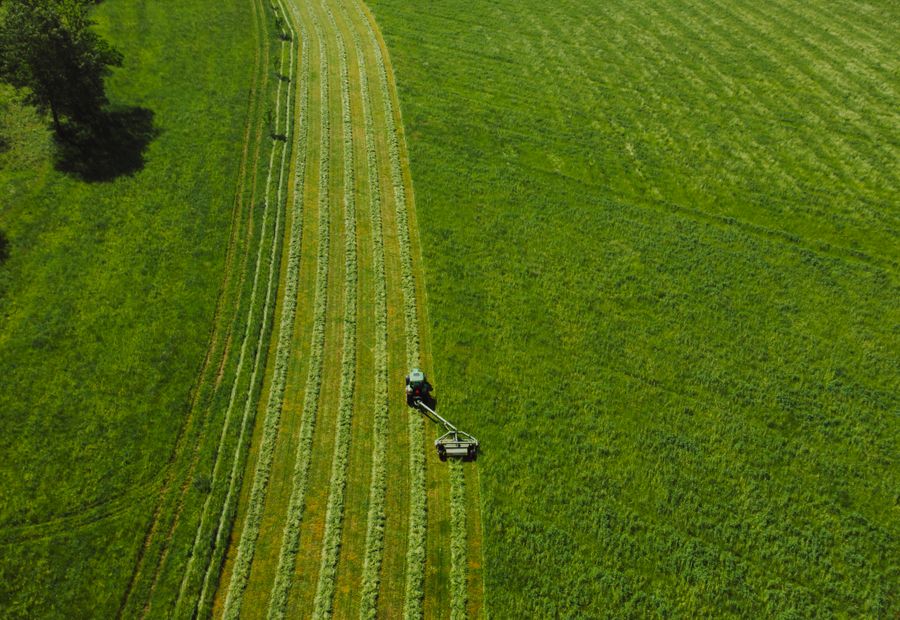
Fort Smith Mulching is a rough-cut mowing contractor bush hogging grown up fields, hay ground, easements, roadsides, vacant lots, pond banks, and cleared acreage on a maintenance schedule for landowners, farms, and property managers in Fort Smith, Greenwood, Lavaca, Barling, Charleston, Booneville, Van Buren, Alma, and Mountainburg. We mow across Sebastian, Crawford, Franklin, Logan, and Scott counties, Arkansas.
A rotary cutter and a mulching head are different tools and the difference is in the cut. A bush hog swings free-hanging blades under a heavy deck. Those blades knock material down and chop it into pieces that lie across the field. Speed is the whole point, and one tractor covers acres in an afternoon. A mulching head grinds stems against a housing and turns them into chips. Where a fence line or a ditch bank puts material out of reach, we run a Diamond Mowers boom mower and take the cut sideways instead of dragging a deck through it. What a rotary cutter cannot do is handle standing wood. Hit a four inch cedar with a bush hog and you have a broken blade, a bent stump, and a piece of tree launched somewhere you did not choose. That is the limit, and it decides which machine shows up.
Maintenance After a Clearing Job
This is the service that protects what you already spent. A mulched field grows sprouts from every root system that survived, and those sprouts are soft and small in the first season. A mower at that stage costs a fraction of the original clearing and keeps the field from ever needing a second one. Wait five years and the sprouts have become trunks, and you are back to hiring a mulching head.
Easements, Roadsides, and Absentee Ground
Utility easements, pipeline right of ways, and county road frontage all need a regular pass to stay passable and to stay out of trouble with whoever holds the easement. Owners who live out of state hire this on a standing schedule and never think about it again. We mow it, we send pictures, and the ground stays presentable whether you visit or not.
What Slows a Mowing Job
Hidden objects and soft ground. Old wire, a buried well casing, scrap left in tall grass, and stumps you forgot about all cost blades and time. Walk the field with us or mark what you know about. Wet ground gets the same answer here as anywhere else on this site, which is that we wait. Call (479) 555-0163 for a mowing quote.
How big a sapling will a bush hog cut?
A rotary cutter handles grass, weeds, briar, and woody stems up to roughly two inches. Some heavy duty decks take three inches slowly. Past that you are throwing wood, dulling blades, and risking the gearbox, and the job belongs to a mulching head instead. If your field has scattered cedar taller than the hood, tell us on the phone and we will bring the right machine the first time.
What does bush hogging cost compared with mulching?
Mowing is the cheaper line by a wide margin, because a tractor and a rotary cutter cover ground fast and the wear parts are blades rather than carbide. Mulching costs more per acre and does a job mowing cannot touch. The smart money uses both: clear once with the mulcher, then hold the ground with a mower every year after.
Is there a minimum acreage?
We take fields rather than yards, and a couple of acres is about the practical floor once you count loading and hauling the tractor. Smaller jobs still work when they sit next to other work in the same area or attach to a larger clearing project. Call with the acreage and the location and we will tell you straight whether it makes sense.
How often should a field get mowed?
Once a year holds most open ground in this climate, and late summer is the usual window because it hits woody sprouts after they have spent the season's energy. Twice a year keeps a field looking maintained and stops briar from ever getting a foothold. Ground you just paid to clear deserves the twice a year treatment for the first two years, then you can back off.