Land Clearing in Fort Smith, AR
Fort Smith Mulching is a land clearing contractor clearing overgrown acreage, timbered tracts, building sites, driveway corridors, fence lines, pasture, and hunting ground for rural landowners, cattle operators, and builders throughout Fort Smith, Van Buren, Greenwood, Alma, Barling, Lavaca, Charleston, Booneville, and Mountainburg, Arkansas. Our service area covers Sebastian, Crawford, Franklin, Logan, and Scott counties.
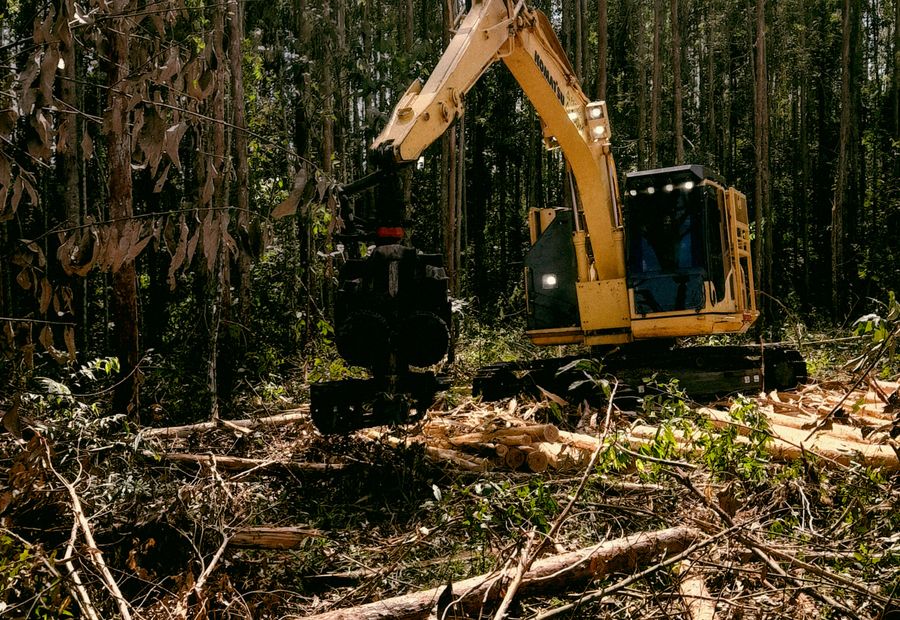
Three machines clear land and each one earns its keep somewhere different. We run FAE heads on tracked carriers from the PT line, and a Fecon FTX for open acreage where the job is volume. Those grind standing brush and small trees into chips at grade. An excavator with a thumb pulls stumps and root balls where a slab is coming. A dozer moves dirt. The blade takes trees over by the root ball, and it lifts the topsoil along with the brush. What sits at the field edge afterward is wood, roots, and the best soil you owned. Each root ball leaves a hole that gets backfilled and then settles for the next several seasons. The mulcher cuts at grade and leaves the root network holding the hill. On the sandstone ridges south and west of town, that root network is the only thing keeping thin soil in place after the first storm.
The End Use Picks the Method
Tell us what the ground becomes and the method follows. Pasture, food plots, trails, and open views go to the mulcher. A house pad, a shop pad, or a septic field goes to the excavator, because the spec wants the root zone gone. Most tracts around here need both, in that order. We mulch the stand down to clean ground first. That gives you a surface a survey crew and a dirt crew can actually walk before anyone spends money on dirt work.
Grade, Drainage, and What Comes After
Clearing changes where water goes. Brush that was slowing runoff is gone, and a bare scraped surface on a grade needs silt fence and seed before the next rain. Mulched ground already carries cover, which is a real advantage on River Valley ridge country. Where a finished grade is part of the job, we cut the vegetation, then shape the ground, then set the drainage line so water leaves the site somewhere you chose.
Why Cheap Clearing Costs More
Three things do the damage every time. Topsoil pushed off with the brush. Craters left to settle under whatever you build next. A burn pile that turns into a permit problem and a bare scar that will not grow grass for years. None of that is a comment on any crew. It is what a blade does to ground.
Scheduling
We quote and work in every month of the year. Leaf off season lets the operator read the terrain and the property lines. Saturated soil takes track damage that lasts, so a soaked week moves the calendar. Call (479) 555-0163 and we will walk your tract.
How big a tree can you clear with a mulcher?
Six to eight inches across is the working size, and a machine eats that all day. Ten inches comes out, just one stem at a time and at a slower rate. Above roughly a foot you have timber rather than brush. Timber wants a saw crew and a log truck, and a sale can put money in your pocket instead of taking it. On a mixed tract we mulch the brush and flag the big stems for you to decide on.
What does it cost to clear an acre of heavily wooded land?
Heavy wooded ground in this part of Arkansas runs toward the upper end of the per acre range, roughly the fifteen hundred to thirty five hundred band, with a project minimum near twenty five hundred so the trailer trip pays for itself. Stem count and stem size move it first. After that comes slope, soft or wet ground, how the machine gets in, and whether a pad or a finished grade follows the clearing. We price the tract in front of us.
What is grubbing and do I need it?
Grubbing means pulling the root zone out of the ground rather than cutting the top off. You need it under a house pad, a shop slab, a barn, or any engineered fill compacted in lifts. You do not need it for pasture, trails, hunting ground, or a cleared view. A mulcher does not grub. When the plan calls for it, mulching is phase one and an excavator does phase two.
Will I have to burn or haul off the debris?
Not on a mulching job. The material stays on the property as a chip layer, so there is no pile to light and no dump fees to pay. Arkansas asks you to notify the state before you burn land clearing debris, and a county burn ban shuts that down entirely during a dry stretch. Clearing with a blade creates the pile. Clearing with a mulcher never does.