Forestry Mulching in Fort Smith, AR
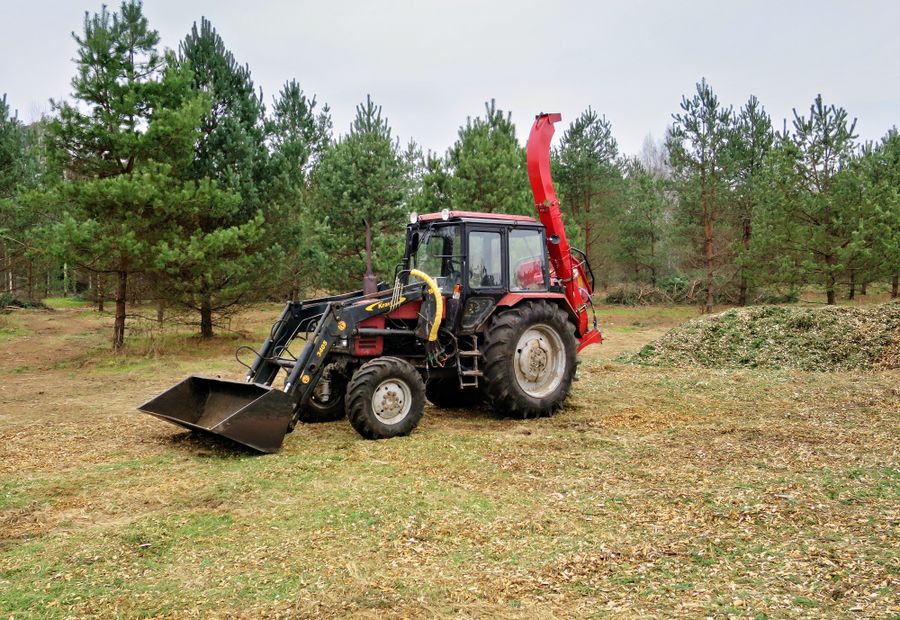
Fort Smith Mulching is a forestry mulching and land clearing contractor doing brush and cedar removal, pasture reclamation, lot and site prep clearing, hunting land trails and food plots, bush hogging, and stump grinding on rural acreage, hunting tracts, cattle ground, and building sites across Fort Smith, Van Buren, Greenwood, Alma, Barling, Lavaca, Charleston, Booneville, and Mountainburg. We work Sebastian, Crawford, Franklin, Logan, and Scott counties, Arkansas. We are a forestry service, not a tree service.
The head cuts and the carrier decides what the head can do. We run a Fecon Bull Hog drum, and a drum carries rows of carbide teeth around a spinning barrel. It bites from any angle, holds the material against the housing, and leaves a fine even chip. Denis Cimaf builds the other drum this trade respects on hardwood, and the River Valley uplands are oak and hickory. A disc head spins a heavy disc with blades on the rim, takes larger stems faster, and leaves a coarser result. Production or finish is the actual trade. The carrier under the head is a high flow tracked machine, a Caterpillar 299D3 XE Land Management or its equal. Hydraulic flow turns a full size head. A standard flow skid steer stalls one in anything real. A dozer works another way. The blade pushes trees over at the root ball and lifts the topsoil with them, and every root ball leaves a crater that settles for years.
One Machine, One Pass
The tree goes in standing and comes out as chips on the ground. No felling crew, no loader, no dump truck, no burn pile, nothing trucked off your place. Those chips break the force of rain and hold moisture through an Arkansas August. Nobody pays for that layer and every job gets it. The root mat also stays in the ground, which is what holds a sandstone ridge through the first hard rain after the brush comes off.
What the Machine Takes
Standing stems up to six or eight inches across are routine. Bigger comes out one at a time, slower, and it costs more per stem. Past about a foot the material is timber. Timber is a harvest with a log truck, and it can pay you instead of costing you.
Selective Work and Regrowth
An operator can take the cedar and leave the white oak standing over it. A blade cannot do that, and it is the main reason landowners here choose this method. Cedar cut at the ground stays dead, because it will not sprout from a stump. Blackberry, sumac, locust, privet, and sweetgum all come back from the roots. Plan on a maintenance pass in year two, or spot treatment on the sprouts.
Booking
We run year round, and winter is often the best month to cut. Leaves are off, the operator sees the ground and the pins, and dormant wood processes faster. Saturated ground is the real stop, because wet tracks leave ruts that stay. (479) 555-0163 reaches a real person.
How much do forestry mulchers charge per hour?
We price by the acre or by the day, not by the hour. There is also a minimum that covers hauling the machine to your property and back, because a half day job on a far tract costs the same trailer trip as a full week. The hourly figures you find online are explainer numbers written by people who are not quoting your ground. Four things move a real price: stem size, how thick the stand is, how steep the slope runs, and how far the trailer travels. Heavy wooded acreage sits at the top of the range. Light brush sits near the bottom.
How long does it take to mulch one acre?
Density decides it, not the acre. Saplings and light brush run a few hours. Mixed brush with stems up to half a foot across takes most of a working day. A heavy timbered acre with big stems and tight spacing runs longer than a day on its own. We walk the ground before quoting and give you a real number instead of a brochure average.
What is the difference between land clearing and forestry mulching?
Land clearing is the goal. Forestry mulching is one way to reach it. A dozer or an excavator clears by moving dirt and roots, which leaves a debris pile and a field of holes. A mulcher grinds the standing material where it stands and leaves chips on the surface. The dozer is the right call when the plan needs a building pad with the root zone taken out. For pasture, trails, hunting ground, and overgrown acreage, the mulcher wins.
Do you need a permit for forestry mulching?
Clearing brush on your own rural acreage in Arkansas generally needs no state permit. Burning the debris is the part that needs one, and a county burn ban can stop a fire outright. Mulching leaves no pile, so that whole question goes away. Clearing and grading an acre or more for construction is a different animal and falls under the state stormwater rules, which your builder handles in his plan. Check with your county before anyone lights a match.