Pasture Reclamation & Fence Line Clearing in Fort Smith, AR
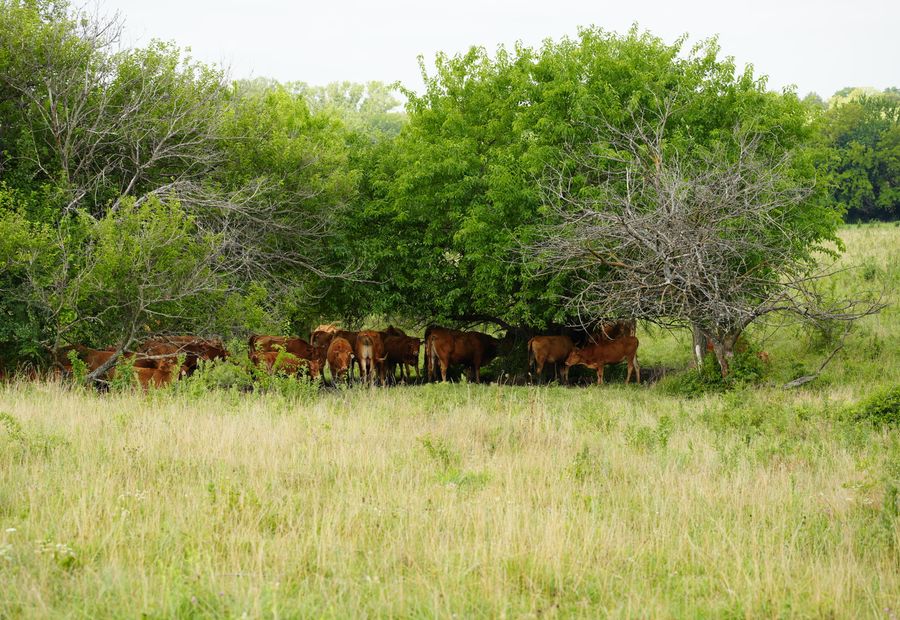
Fort Smith Mulching is a pasture reclamation and fence line clearing contractor taking grazing acres back from eastern red cedar, blackberry, locust, and volunteer hardwood for cattle operators, hay producers, horse properties, and hobby farms around Fort Smith, Greenwood, Lavaca, Charleston, Booneville, Barling, Van Buren, Alma, and Mountainburg. We cover Sebastian, Crawford, Franklin, Logan, and Scott counties, Arkansas.
Pasture ground is soft ground, and the carrier matters more here than anywhere else on this site. We run ASV Posi-Track undercarriages from the RT forestry series, which spread machine weight across a long rubber track and put down a fraction of the ground pressure a tire does. That is the reason a mulcher crosses a damp draw and leaves a mark where a wheeled machine would cut a trench. The head is a Loftness Battle Ax drum, and it throws the finest chip of any drum we have run. Fine chips lie flat, break down quickly, and do not windrow into a mat your seed cannot get through. Set that against a blade clearing the same field. The blade lifts topsoil with the cedar, leaves a crater at every root ball, and stacks the whole mess where your best dirt used to be. Pasture is the one place a landowner can least afford to lose soil.
Working Around Existing Wire
Most of these fields still have a usable fence somewhere under the brush. The operator cuts to the wire and not through it. Where you are rebuilding, we take the line down to clean ground at whatever width your fence crew asks for, and a crew that gets a clear line builds faster and charges you less for it.
Gates, Lanes, and Paddocks
Cattle handling depends on openings. We cut gate approaches wide enough for a truck and trailer, open lanes between paddocks so you can rotate without walking cows through thicket, and clear a working alley to the corral. Owners running rotational grazing get more out of a reclaimed field than owners turning everything into one pasture, because the brush comes back slowest where grass gets grazed and rested on a schedule.
What Comes Back
Cedar cut at ground level is gone permanently. Blackberry, locust, sumac, and persimmon sprout from roots the machine never touched, and they move fast in an open field with sunlight on it. Grazing pressure and a mower handle most of that. A short return pass in the second year handles the rest. We say this before the job, not after.
Season
Reclamation runs all year. Winter suits it, since the herd is off the ground and the cedar stands out green against bare hardwood. A saturated field waits, because ruts in pasture last longer than anyone expects. Call (479) 555-0163 to walk your fields.
Can I seed grass right after the mulching is done?
Usually yes, and dormant seeding into a fresh chip layer works well here. The chips sit on the surface and hold moisture and seed against a hard rain instead of letting both run off. Where the layer came out thick, we make a second light pass to spread it thinner so seed reaches dirt. A soil test tells you the rest, since ground that grew cedar for twenty years is often sour and short on fertility.
Do I have to pull my fence before you clear the line?
No. The operator works the brush side of the wire and leaves the fence standing. Tell us which sections you plan to keep and which ones are coming out anyway, because that changes how close we cut. Where a fence crew is following us to rebuild, we cut wider and take the line to bare ground so they can drive posts without fighting roots and limbs.
How much pasture can cedar actually cost me?
Grass quits growing under a closed cedar canopy, so those acres come off your carrying capacity entirely. The loss creeps, which is why owners underestimate it. A stand that started along one fence line ten years ago is now shading a strip a hundred feet wide across the whole field. Walk the field edge and measure what you are no longer grazing.
Can you clear around a pond and the water gaps?
Yes, and that work is worth doing. Brush closing over a pond edge keeps cattle from a clean approach and hides bank damage. We open the approach lanes and leave enough woody cover for shade where you want it. Around a wet draw or a water gap the machine stays on firm ground, and if the crossing is soft we wait for it to dry rather than tear the bank up.